Basques once believed that humans descended from bears.
In Europe, where primates were absent, humans shared their habitats with bears. It is said that the ancient hunters saw the likeness of themselves in the bear, whose skinned body is incredibly similar to that of a human being. Basques who spent centuries coexisting with the creatures found them to be so intelligent that they once must have ruled the earth. “Bears were humans, but they wore heavy fur coats.”
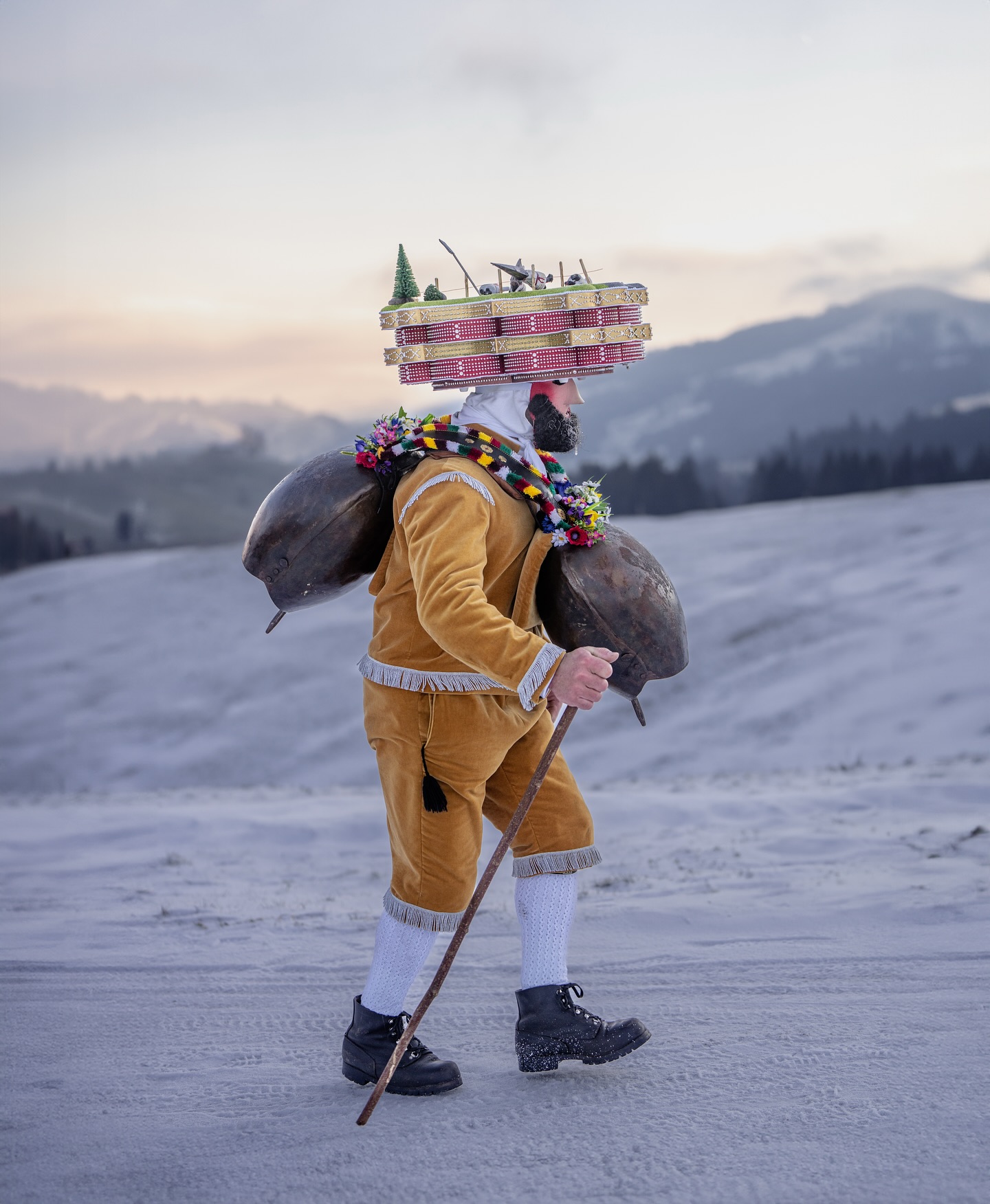
The Basque Bear or “Hartza” character of the Ituren-Zubieta carnaval is paraded through the streets of Ituren and Zubieta, held captive by his master who proudly flaunts his prisoner. The fight between the master and the bear is constant, as the bear breaks boundaries to attack the spectators, both young and old. He is surrounded by a troupe of ‘Joaldunak’ who march in unison, ringing their heavy bells to scare away witches, wolves, and evil spirits.
An interesting ursine trait of the Joaldunak is how they emit a deep huffing sound, produced by their their rhythmic, rapid breathing as they march. The sound is characteristic of the huffing “huh, huh, huh, huh” that bears make in the wild when they are warning intruders to back away.
Another ursine trait of the Joaldunak is the unique manner in which they march. Their feet point outward, and their walk imitates the rocking gait of a bear walking upright.
Additional sources: “Recovering European Ritual Bear Hunts: A Comparative Study of Basque & Sardinian Ursine Carnival Performances” by Roslyn M. Frank