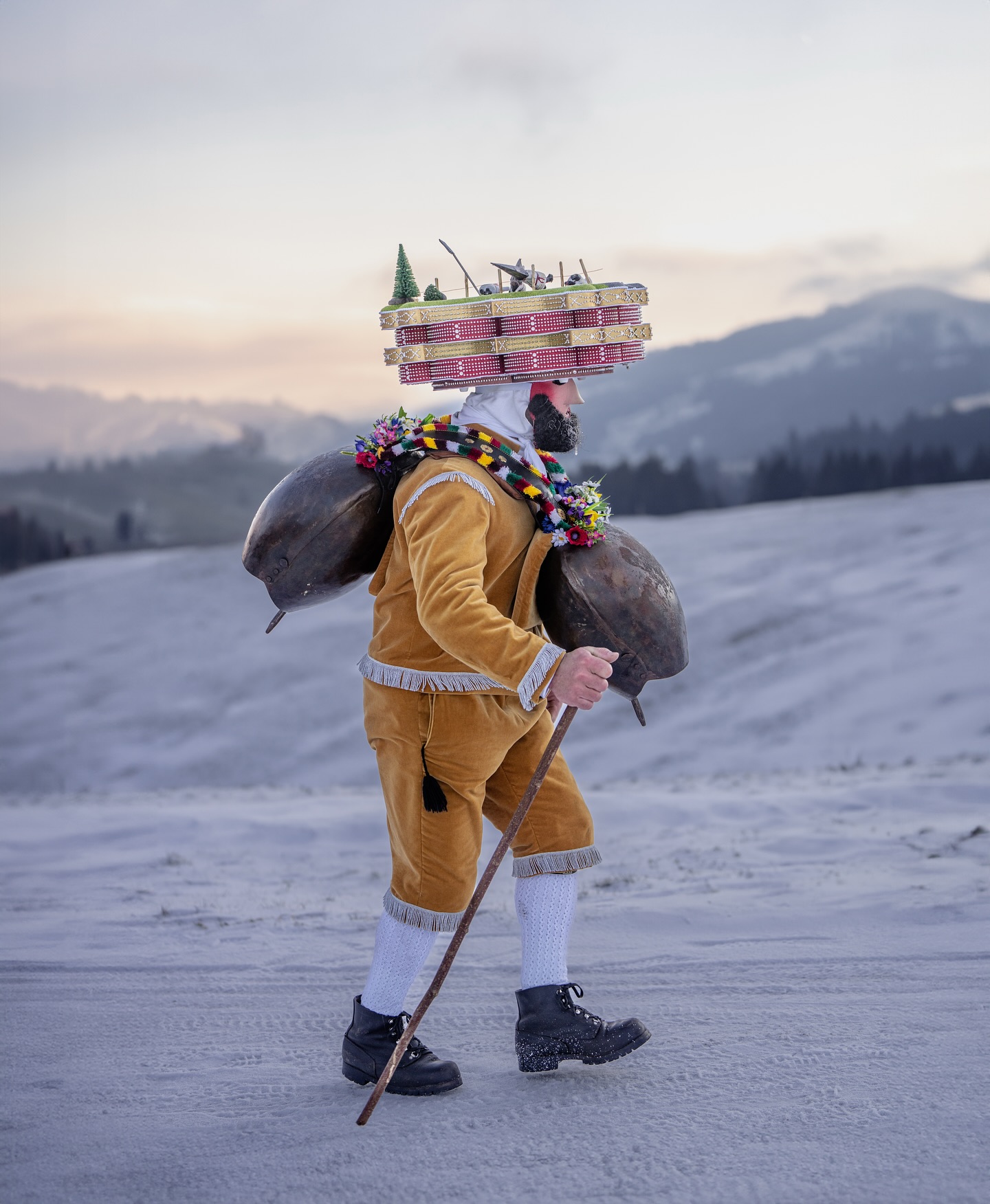
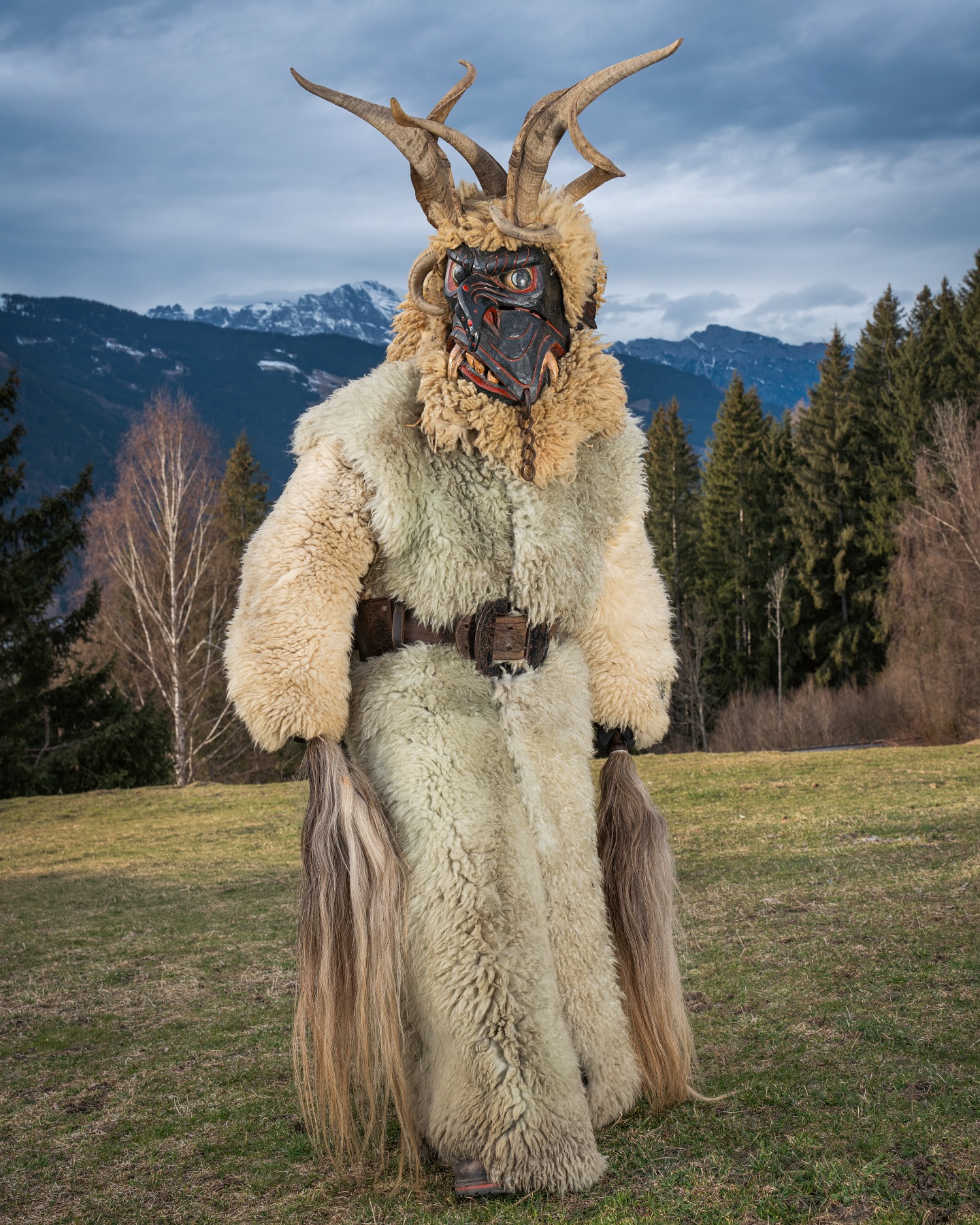
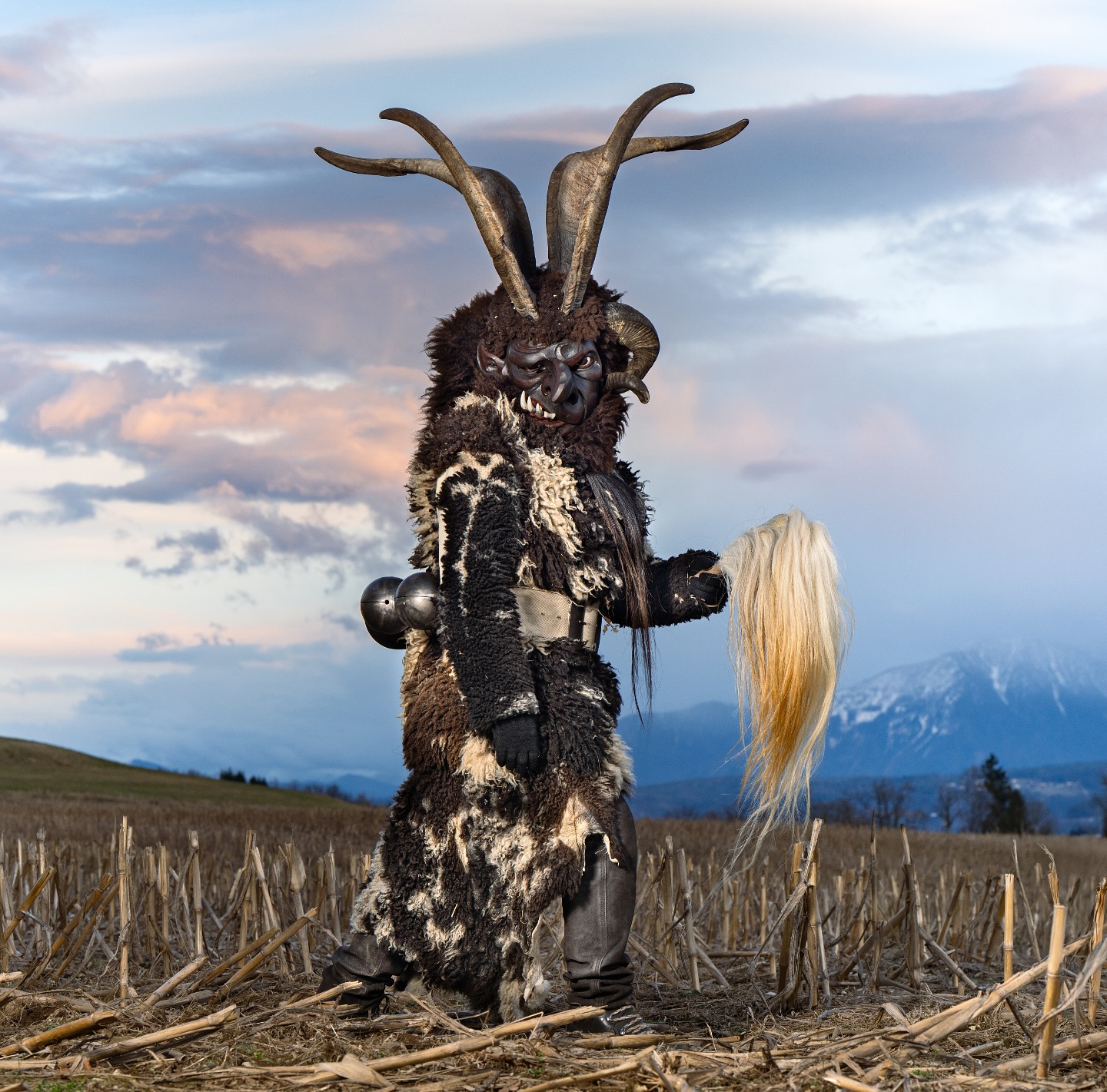
The Tertenese carnival began on Shrove Thursday called “giobia lardaiolu” because the the wealthy families of the community used to make fava beans with lard and offer them to the neighborhood.
Both men and women disguised themselves. Those who interpreted the ‘Shepard’ wore sheep skins and a black mask with human features, or had a face blackened in soot. Those who interpreted the livestock wore zoomorphic masks and goat horns, covered in animal skins and adorned in large bells. The third figure was represented by S’Urzu which represents a wild boar. He symbolizes a connection to the cycle of life, death, and rebirth, which is common in many Carnival celebrations that mark the transition from winter to spring.
In Sardinia the term “su Maimoni” can be linked to rite that creates rainfall. It is said that in Tertenia, in times of drought, some men in great secrecy would journey during the night to the charnel house (a structure where human remains and bones are stored, often due to a mass burials). There, they would take an odd number of skulls, which were tied with reed to avoid losing them, and take them into the river putting them in contact with the water. From the moment the rains began, the skulls had to be brought back to the charnel house to avoid cloudbursts and destructive storms.