The Dance of the Pochó is one of the most important in the pre-Hispanic world, and although over the years it has been changing, it is still a symbol of identity of the Tenosiquens. The residents of Tenosique, a municipality bordering the department of Petén, in Guatemala, gather to execute the dance illustrating the eternal struggle between good and evil.
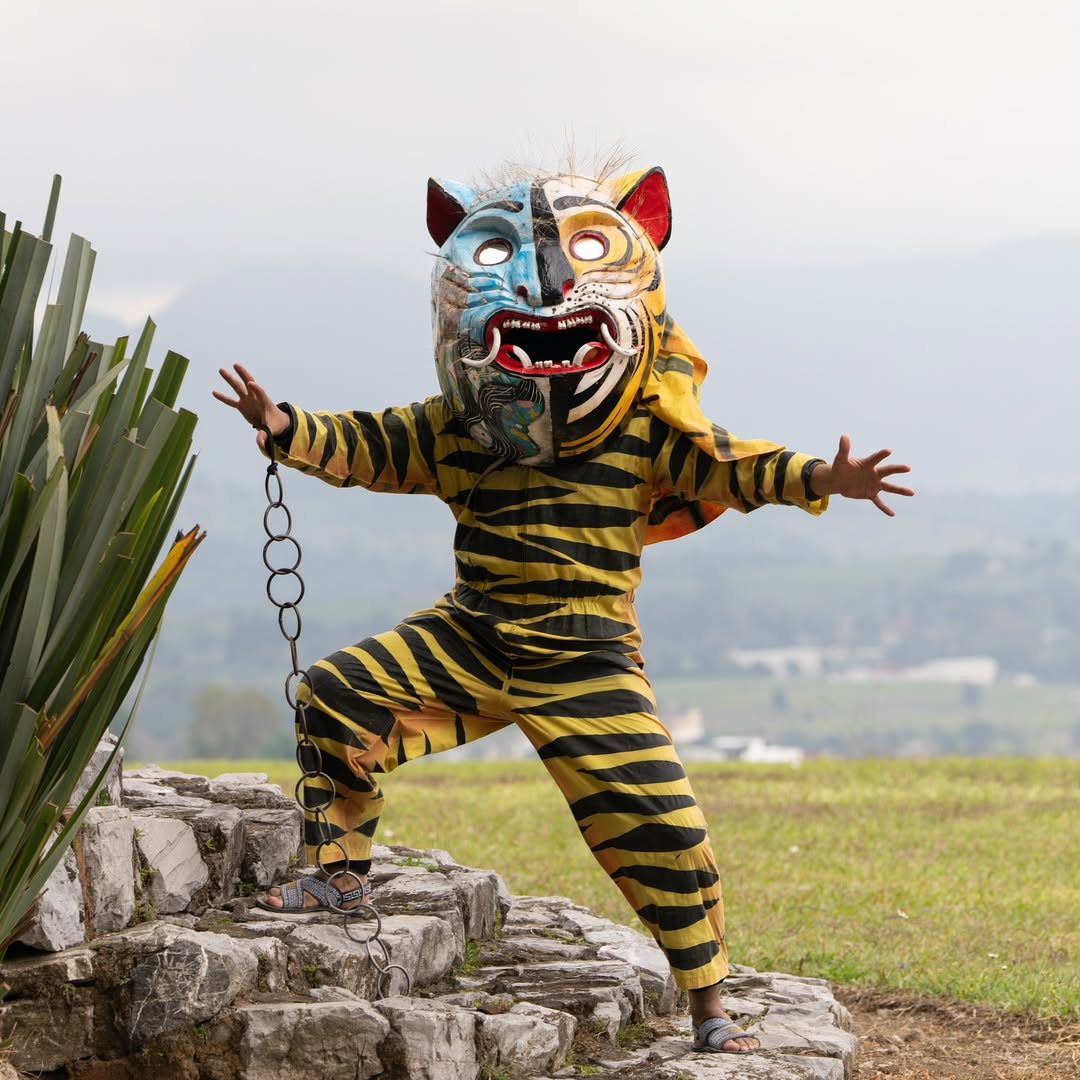
Three characters with unique outfits are protagonists of this celebration: the ‘cojóes’, the ‘pochovera’ and the ‘tiger’, which actually represents a jaguar. The three align themselves to defeat the Pochó or the evil God, and bring about the purification of man.
The Cojóes are the soul of the dance — they joke with the public, ridiculing current affairs, they are characters of ingenuity and good humor. Their name can be derived from the Mayan word ‘koh’, which means ‘mask’, or ‘the one who is instead of another’. The Cojóes offended the god Pochó and were forced to disguise themselves as wooden men. They wear a white cape, chestnut leaf skirts and cover their torsos with heneque ribs. In addition, their ankles wrap them with dried banana leaves and friar cups, which sound constantly during the dance. On their faces, they wear wooden masks and hats adorned with blades and tulip flowers. An inseparable element of the outfit is its long cane sonaja called chikish, which were associated with rain plea ceremonies (the sky looks like it was doing a good job, right? 😉).
The jaguars paint the body with mud, marking the spots of the feline with coal, and wrap themselves with jaguar skins. Flowers hang from his forehead, similar to those that wear the Mayan deity known as Jaguar del Lirio Aquatic in Mayan iconography. A whistle is tied to the same thread that holds the flowers.
Additional Textual Support: Erika Montejo, Tomás Pérez Suárez. Archaeologist for ENAH.
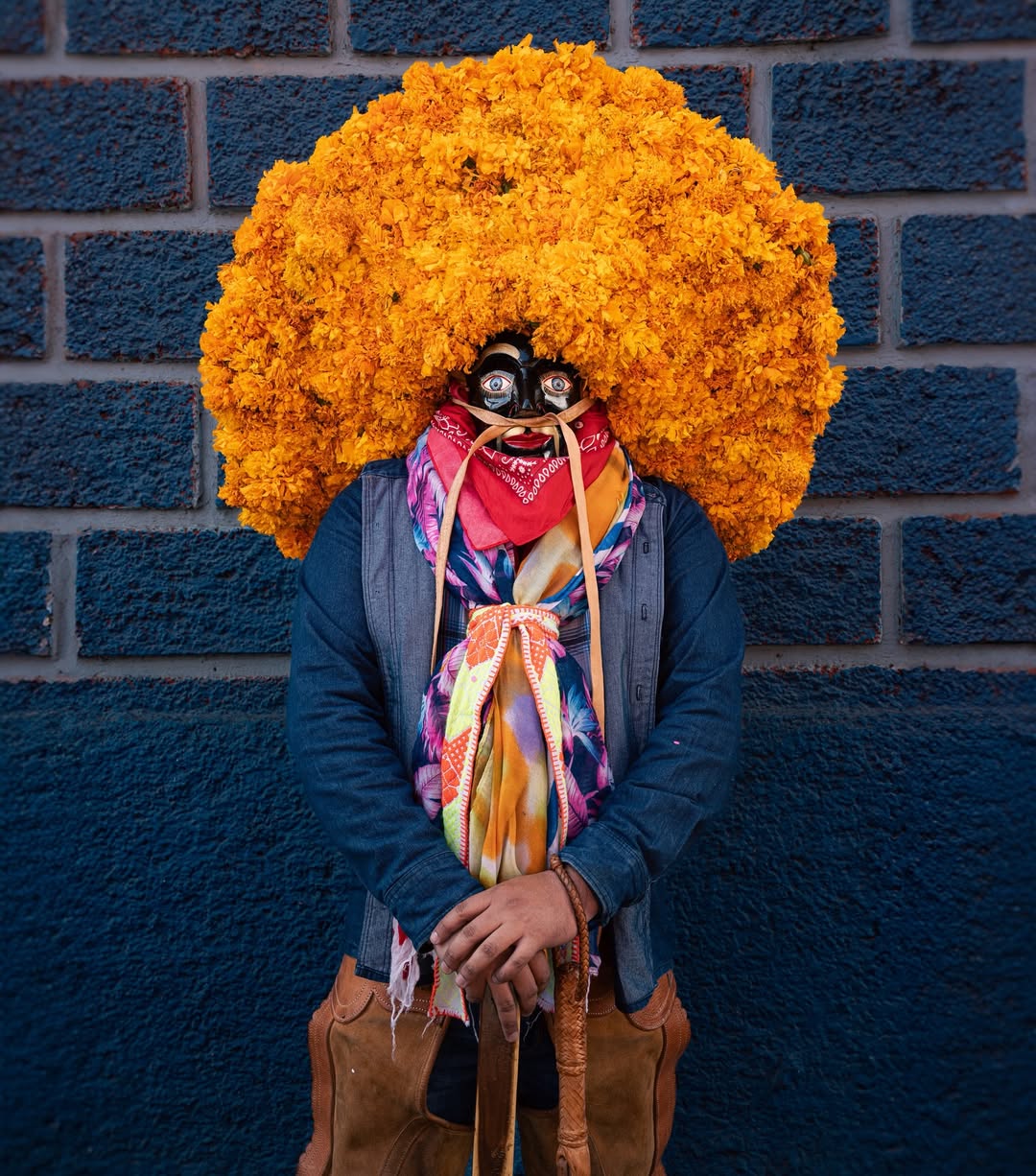
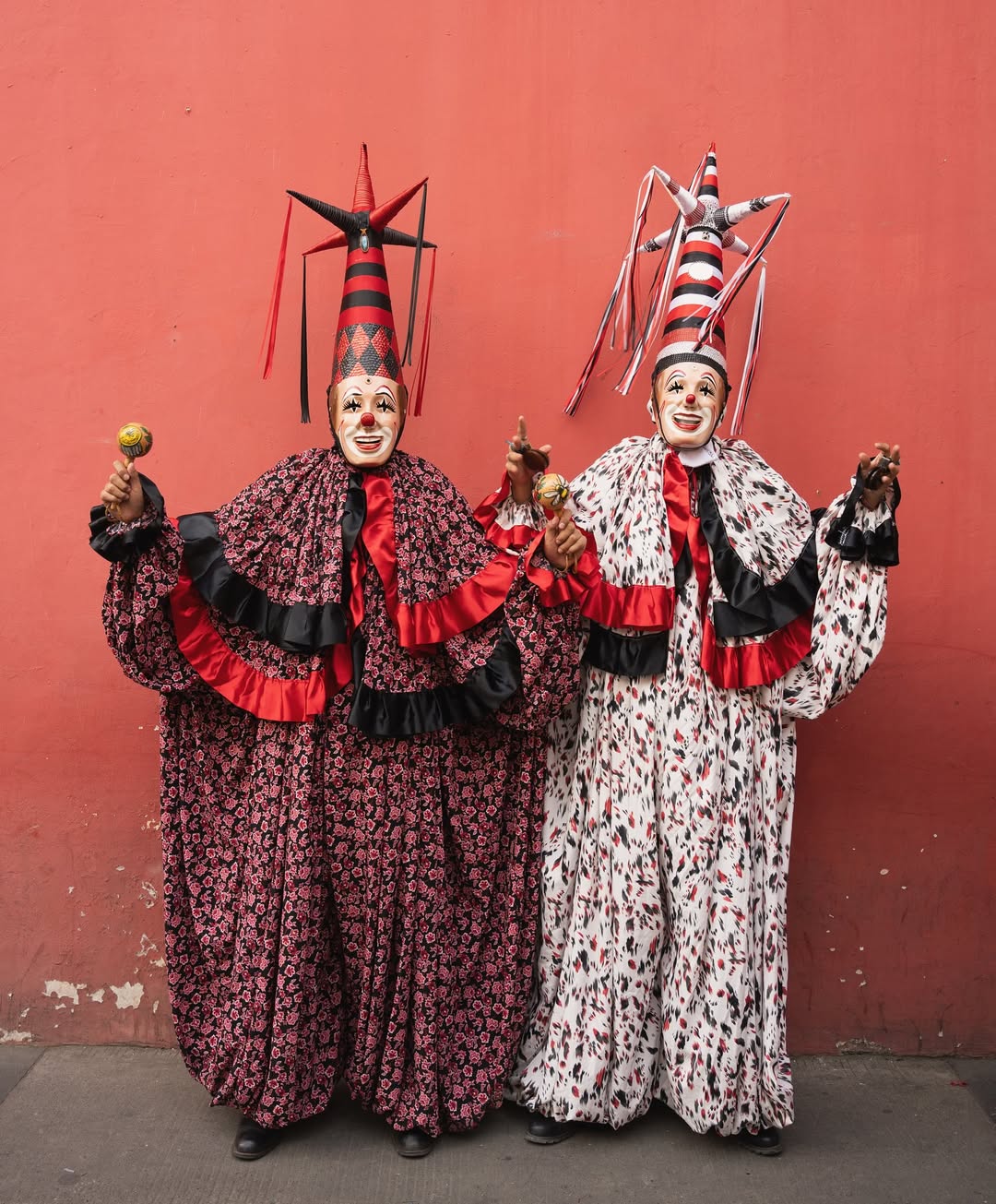
Capture at Festival de Mascaras Danzantes, Coscomatepec