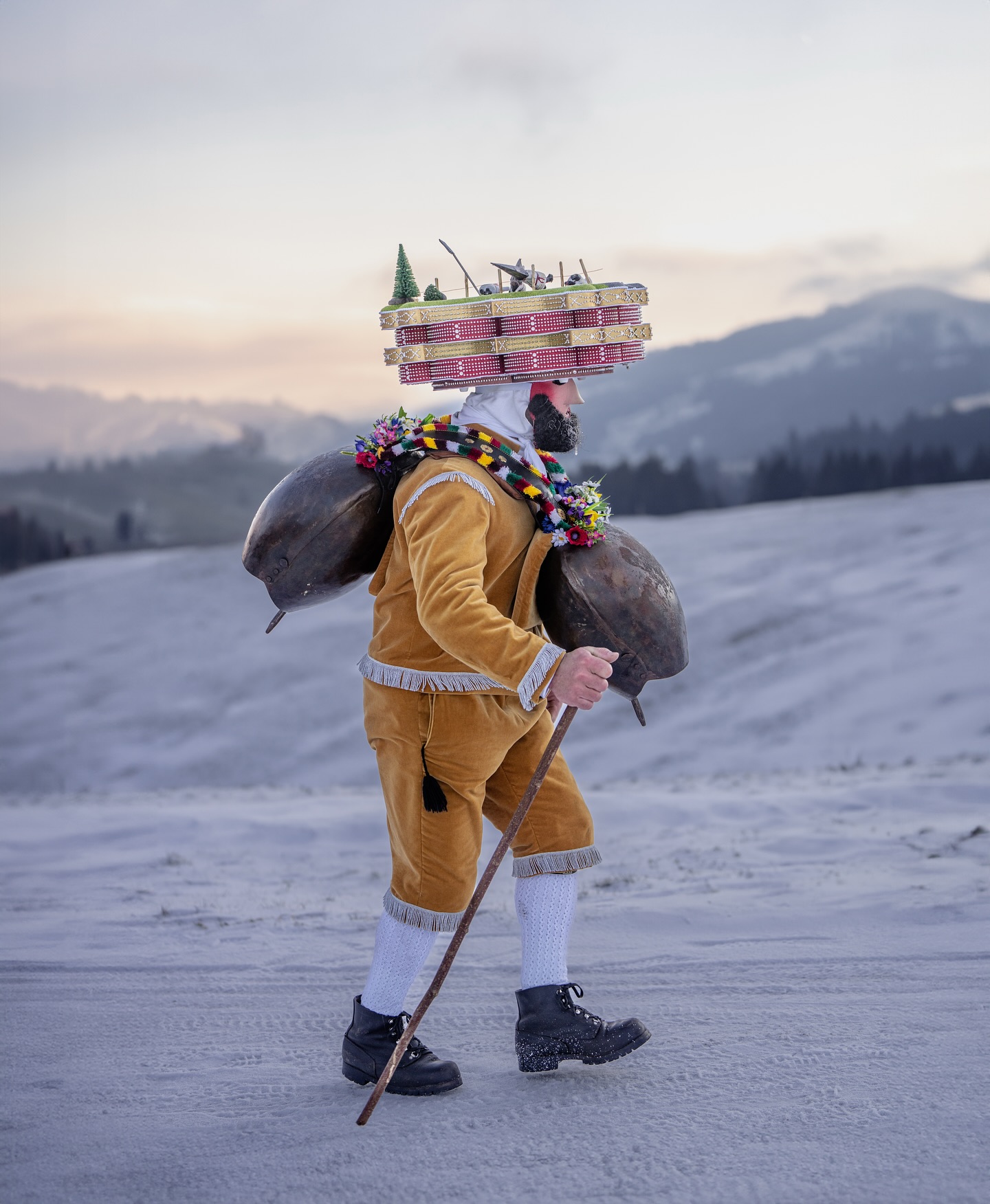
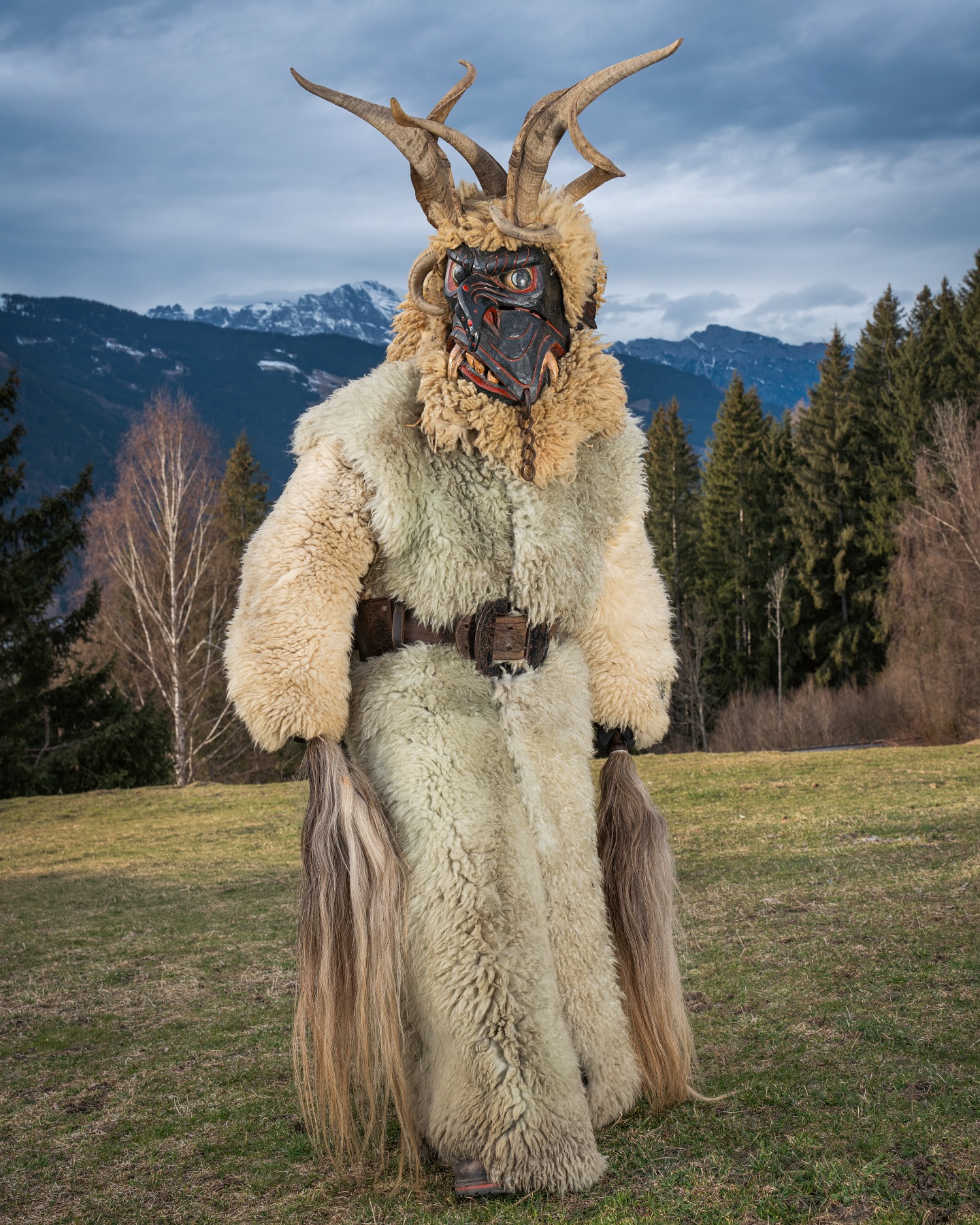
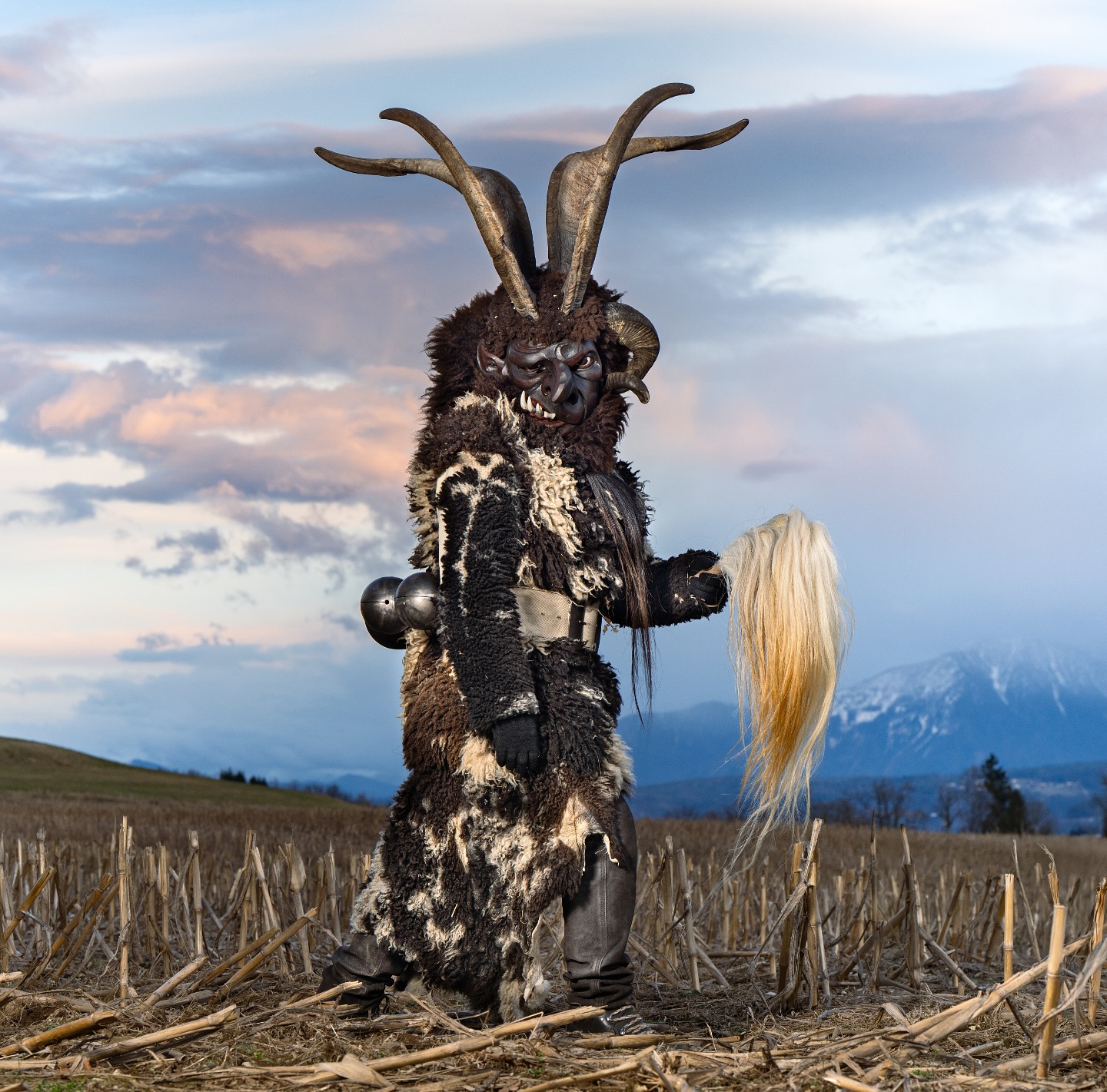
Traces of the ancient cults of the archaic Mediterranean, where the cult of fertility is rooted, are apparent in the Merdules masks. The “Merdule” wears the human mask, it is speculated that the name has Nuragic origins: mere = master and ule = ox; thus “Owner of the Ox”.
“Sos Boes” wear the oxen mask, decorated and embellished with a chisel and knife; the figure of the bull, the ancient Punic- Nuragic deity. “Su boe” represents the animal rebelling against its master. Initially his cadenced steps give a rhythmic ring to the cowbells, but soon enough he creates havoc, charging against the Merdule. His master uses his stick “su Mazuccu” or leather whip “sa Soca” to try to restore order.
Both the Boes and the Merdules wear sheepskins with full fleece and wear wooden masks on their faces carved from wild pear wood called Carazzas (in Sardinian, “cara” means face). The Boes masks often have carvings with a red six-pointed star on the forehead and green leaves on the cheeks. They carry a dense cluster of cowbells on their shoulder, called “sas sonazzas” or “erru.” The Merdules unlike the Boes, do not wear bells.
There is also a female figure “sa filonzana“, which is a mournful-looking old widow spinning wool with a spindle. Stay tuned to learn more about her folklore
One wonders why the Church, in so many centuries, was unable to completely eradicate this rite. The answer is to be found in the drought that periodically hit the island, halving the population and causing various types of plagues due to the lack of water. The serious famine that hit the island in 1678 remains memorable.
Textual sources: LA MASCHERA DI SORGONO IS ARESTES E S’URTZU PRETISTU, Dolores Turchi (2010)”